
The National Infrastructure and Service Transformation Authority (Nista) marked its first birthday in April – a celebration possibly short on cake, but visibly long on ambition.

CEO of Nista Becky Wood
Nista’s establishment on 1 April 2025 via the merger of the National Infrastructure Commission and the Infrastructure and Projects Authority was designed to bring UK infrastructure strategy and delivery together – mainly through the management of the UK Government’s 10 Year Infrastructure Strategy, one of whose aims is to move away from erratic investment toward long-term planning.
In turn, the strategy is supported by The Infrastructure Pipeline, published in July 2025 – a database of public and private projects over the next decade, valued at £700bn+ and designed to provide high visibility on planned schemes.
For Nista CEO Becky Wood – who took up her role in June 2025 – there’s a consistent theme running through the authority’s remit. That theme is about re-framing what success looks like and how it can be achieved; and it applies as much to the organisation she heads as to infrastructure itself.
“We want to build a relationship where there is an opportunity for [senior responsible owners and other project stakeholders] to say – ‘You know what, I’ve got concerns – could you have a look at this with me?’ Because this needs to be a useful thing to drive delivery, so we’re not coming in on the wrong foot. We want to come in as an enabler.”
That approach is important given the scope of the government’s infrastructure plans, which are described in ICE’s State of the Nation: Infrastructure in 2026 report – published in March – as a “Herculean to-do list” encompassing the asset health crisis, cost efficiencies, decarbonisation and data usage, as well as skills and capacity challenges and materials supply. State of the Nation also identified a need for greater collaboration; for large-scale innovation across investment, procurement and technology; and for industry to build its skills and capability.
Wood acknowledges the scale of the task and notes that much of Nista’s “enabler” role will be “bringing coherence to a complex system”, supported by a focus on collaboration and applying clarity to industry’s multiple requirements.
It’s no surprise that Nista’s first year has involved addressing an array of questions. “How do we streamline the approvals processes? How do we as the central government body, target our focus on roughly the right number and the right shape and size of portfolio?
Similarly, how do we deepen things like our data capabilities and how we’re leading and supporting that deepening of capability across the project delivery profession as a central body?”
In grappling with these, Nista is evolving in two areas, Wood says. The first is the need for the authority “to play an active and meaningful role upstream”, earlier in project development phases. “Starting a project well is absolutely fundamental,” she says.
The second is to ensure that Nista’s expertise as a central body “is deployed thoughtfully and purposefully across a targeted and focused group of complex and large projects”.
In terms of that “targeted and focused group” of schemes, the reset of the Government Major Projects Portfolio (GMPP) from 1 April this year will be consequential. The refreshed GMPP will reduce from over 200 projects to 81 – with the view that a smaller, more focused portfolio will provide support and scrutiny where it is most needed.
Wood points out that this is particularly relevant to addressing the ageing asset crisis, with a move to “balance our focus between the existing asset base and the opportunity to build new”.
“It’s about thinking of ageing assets as part of a much bigger system that might also include new builds and being more considered about how you bring them together. What that means is you do have to have a more targeted direct engagement across multiple projects, at the same time as considering the system.”
I’m absolutely invested in the fact that this infrastructure responsibility we have, these different forms of assets that we’re building or maintaining or planning for, need to serve the communities for which they’re built
Year one wins
Over the past 12 months, Wood points to “fantastic highlights in terms of seeing individual projects championed, being able to have conversations across government and with ministers about how we’re moving into the future on some big-ticket items like Lower Thames Crossing [LTC]”.
LTC is a key project in the GMPP and one that Nista was instrumental in shaping – it had key input into the funding model for the scheme, specifically pushing for a Regulated Asset Base model. It also played a role in scrutinising LTC’s Full Business Case and providing oversight to manage the risks associated with such a large infrastructure project.
Among Nista’s project-led milestones for the year, she also cites the Northern Growth Strategy. As the central body delivering infrastructure for the strategy, Nista reports to HM Treasury and the Cabinet Office, overseeing project lifecycles with its roles including strategic planning; development and delivery – removing project barriers, particularly for rail-led development; in which it has oversight of major projects like Northern Powerhouse Rail.
The authority has also spearheaded sector-wide initiatives including the launch of the UK Government’s Programme and Project Data Standard (GovS 1002) in late 2025, which standardises how data is created, defined and maintained across government projects and is destined for mandatory adoption by January 2027.
“It’s about having a protocol from the outset of projects,” says Wood. “That’s thematically part of what we’re trying to do at a system level; thinking early about how we go into these conversations means the benefit is deeper in terms of how we can enable outcomes by sharing data back across accountable teams.”
She also points to the National Infrastructure Spatial Tool – known as Align – which has been “coming to life and maturing”. The tool – developed by the Ministry of Housing, Communities and Local Government (MHCLG) in collaboration with Nista – maps infrastructure needs. It combines data on transport, energy, water and digital telecoms to identify constraints, aiding in planning for housing and industry development.
Wood is also interested in further leveraging technology to address potential gaps in data.
“We have an independent assurance role on several critical national projects, but I’m also privileged to hold the role of the head of function for government project delivery. What that means is being thoughtful about AI and data. What do I need to be preparing and delivering and engaging my project professionals on? What are the skills of the future I should be making sure that they have access to and I can provide?”
Meanwhile, she confirms Nista is widely engaged with decarbonisation by bridging the gap between “what we build and how we build it”. And a specific milestone was the release of Nista’s Whole Life Carbon (WLC) Handbook (2026) on 5 March. It provides guidance for UK infrastructure projects to measure and reduce carbon emissions across their entire lifecycle, aligning with PAS 2080:2023 and embedding WLC into Treasury business cases.
The investment profile of infrastructure is another focus, Wood says, adding that again, a pre-emptive system-led approach will be key to cost efficiencies and investability. She references the Office for Value for Money report Value for money study: governance and budgeting arrangements for mega projects, published last June. The report details flaws in how government management of mega projects works at present, warning that they are not set up for success from the outset.
“My market and sector engagement role is about us reorganising to make sure we’ve got the breadth of leadership to take projects out to the market. The reason the word engagement is in there is because we need to be informed by industry and investor groups as to how best to do this.”
As part of that engagement, Wood works with PuFIns (Public Financial Institutions) – a group of state-backed UK lending institutions designed to deliver policy goals – on “thinking about how we could bring together infrastructure need and appropriate investment models to tackle infrastructure gaps”.
Her background as a senior responsible owner on major projects including Crossrail informs her thinking. “How we make sure that the outcome for users works is present in our minds – even from the earliest stage of a project – is something I learned in my time with Crossrail; thinking about bringing into use and the way in which an asset going to be operated in the future.”
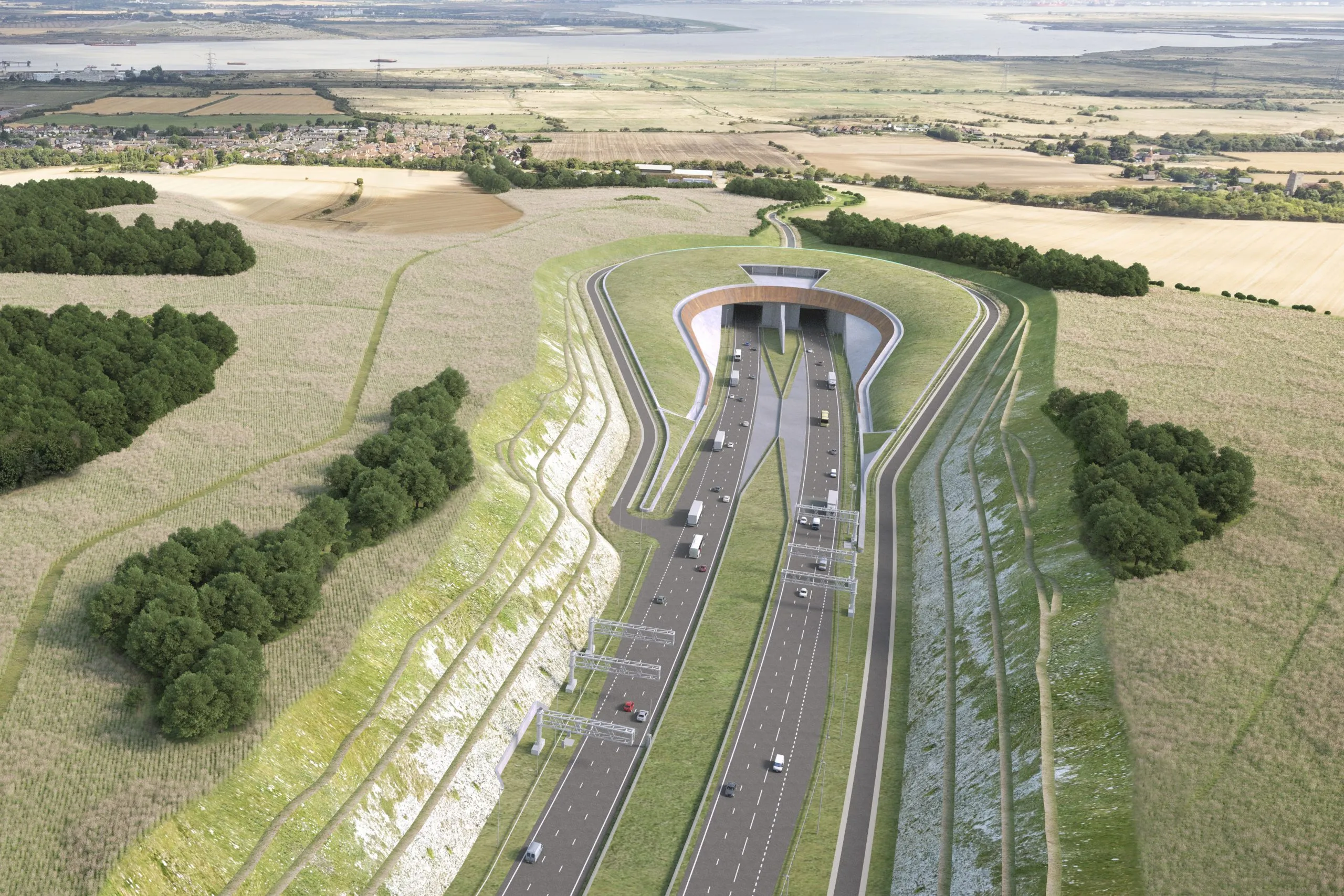
Nista was instrumental in shaping Lower Thames Crossing (LTC) with its contribution including input into the funding model for the scheme
Sectoral oversight
On the developments in major infrastructure sectors – “From a systems perspective, we absolutely have a role to play,” says Wood. “For us it’s about drawing the lessons from sources including recent regulatory reviews as to the core principles we need to be mindful of.”
She references reviews such as The Fingleton Review of 2025 – proposing a “radical reset” of the UK’s nuclear regulatory system, The Cunliffe Review of July 2025 – proposing an overhaul of the UK water sector, as well as The Corry Review of April 2025 – analysing Defra’s regulatory landscape.
In the energy sector, one area of influence demonstrated by Nista is the prioritisation of nuclear projects as part of a broader national infrastructure strategy based on long-term needs. Meanwhile, Wood notes that across the sector, thinking systemically is key.
“For example, with electricity, we can’t forget about transmission; that’s hugely important. It’s not just about generation – it’s about how we move electricity around and how we make sure that it reaches the right place.”
She adds that, “there are plenty of systems-based opportunities that Nista can and should play a role in the water sector”, noting that long-term needs are “absolutely central to planning for the nation into the future”, citing new towns and data centres as examples requiring an integrated strategy.
Nista also advocates a systems approach to delivery in road and rail projects, recognising interdependencies between different sectors rather than treating schemes in isolation.
On the roads sector, “with RIS3, new ways of procuring to avoid cost overruns are going to be important. I’m interested to see where they take it. I don’t think it’s for me to direct them – it’s for me to partner up, understand and provide support.”
In rail, Wood welcomes the potential transformation offered by the newly formed Great British Railways (GBR). “Rail is rapidly evolving and I’m interested to see what this next chapter can and should involve for passengers. I’m curious about how GBRX [GBR’s innovation division] will work in terms of creating positives.”
Diversity and capability
Looking ahead, Wood believes breadth and diversity of experience have been and will continue to be central to the difference Nista can make. This will inform its work on industry skills with the Department for Business and Trade. Nista will also utilise the Infrastructure Pipeline “to be focused and thoughtful about where skills are needed and the types of skills that are already there”.
For Nista itself, she notes: “I’ve been really impressed by the power I’ve seen in bringing together different skills and capabilities and mindsets. It’s been fantastic to see some of our teams combining around the opportunities ahead of us.”
Nista’s Expert Advisory Council – which appointed Julia Prescot CBE as chair in February and is appointing council members at the time of writing – has a role to play in bringing different viewpoints into the organisation while supporting its independent voice, she says.
“There’s a lot going on – we’re working through huge amounts of change. There’s plenty to think about and all of us are mindful of the geopolitical context. So having a purposeful group of individuals to work with me and support me in advising ministers in the right way is really important.”
As Nista’s first CEO and a female industry leader, Wood describes her position as “a gift in terms of how I can contribute to creating pathways across the divide”, but she’s also clear that supporting a range of perspectives should ultimately be in the service of better outcomes.
“Gender is significant and I’m not disavowing it at all, but I see this as a wider opportunity.
“Ultimately, major projects thrive on great people and the right people at the right time. And some of that goes back to that idea of diversity of thought and the importance of teams being representative, frankly, of communities.
“The reason I took this job is because I’m absolutely invested in the fact that this infrastructure responsibility we have, these different types of assets that we’re building or maintaining or planning for, need to serve the communities for which they’re built.”
Like what you’ve read? To receive New Civil Engineer’s daily and weekly newsletters click here.

