
Editor’s note: This article is adapted from a version published Nov. 11, 2025, by the Center for Transportation Studies at the University of Minnesota.
The United States processes a staggering 14.5 million tons of plastic packaging and containers as solid waste every year—the weight of more than 60,000 Statues of Liberty. Finding new, high-volume uses for this plastic is crucial for diverting material from landfills, reducing pollution, and shrinking our collective carbon footprint.
To tackle this challenge, University of Minnesota researchers partnered with the Minnesota Department of Transportation (MnDOT) to determine if durable drainage pipes made from recycled plastic could be effective when used for culverts and storm sewers beneath the state’s roadways.
According to the project’s lead investigator, University of Minnesota Duluth assistant professor of civil engineering Michael Pluimer, the timing for this research is critical because of recent policy shifts. Although MnDOT currently prohibits the use of pipes made from recycled materials, Pluimer says recent changes to federal standards do allow for corrugated high-density plastic pipes manufactured with more sustainable postconsumer and postindustrial recycled content. “Recent national research has found that these pipes can be effective for drainage applications,” Pluimer adds.
The study’s objective was to directly compare drainage pipes made from entirely new plastic with pipes made from a mix of 60 percent recycled materials and 40 percent new content. In a field test, both pipe types were installed as a culvert replacement under a state highway near Fosston, Minnesota. The pipes were instrumented to track performance under live traffic. Although challenging weather conditions limited the sensor data gathered, a three-year post-installation inspection confirmed that the pipe with recycled materials was performing just as well as the pipe made from new plastic.
Beyond durability, a comprehensive life-cycle assessment revealed other advantages to using pipes made with recycled content. Recycled plastic pipes were found to be even more cost-effective than plastic pipes made with all new materials and significantly less expensive than traditional concrete or metal pipes. An example analysis of a 1,000-foot pipe system, which included cost of materials, installation, maintenance and replacement, and anticipated service life, showed that pipe made with recycled materials resulted in current-value savings of $16.4 million compared to a pipe with 100 percent new materials over a 100-year period.
The use of recycled plastic pipes also results in environmental benefits because less energy, including fossil fuel, is required to obtain and prepare recycled materials than new. These benefits include a decrease in global warming, acidification, eutrophication (nutrient runoff in water), and smog.
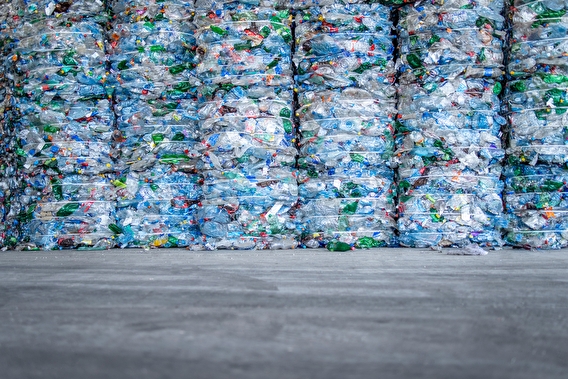
Given the positive results for durability, cost-effectiveness, and environmental performance, researchers recommend that MnDOT consider using corrugated high-density plastic pipes manufactured with recycled content for future culvert and storm drain applications.
Erik Brenna, assistant state hydraulic engineer with MnDOT’s Bridge Office, says the research results are “productive for the future consideration of high-density polyethylene pipes manufactured with recycled content. MnDOT will continue to monitor the performance of these pipes over a longer period.”
Future research could focus on monitoring performance at a second, drier test site to gather more comprehensive sensor data. Ultimately, this investigation offers a compelling vision: that our plastic waste could become a valuable resource for building crucial infrastructure.


