
No infrastructure sector was as profoundly hit by the pandemic as the airports sector. Even while the UK government attempted to avoid implementing shutdown measures, airlines cancelled flights and the closures that followed took a long time to recover from.
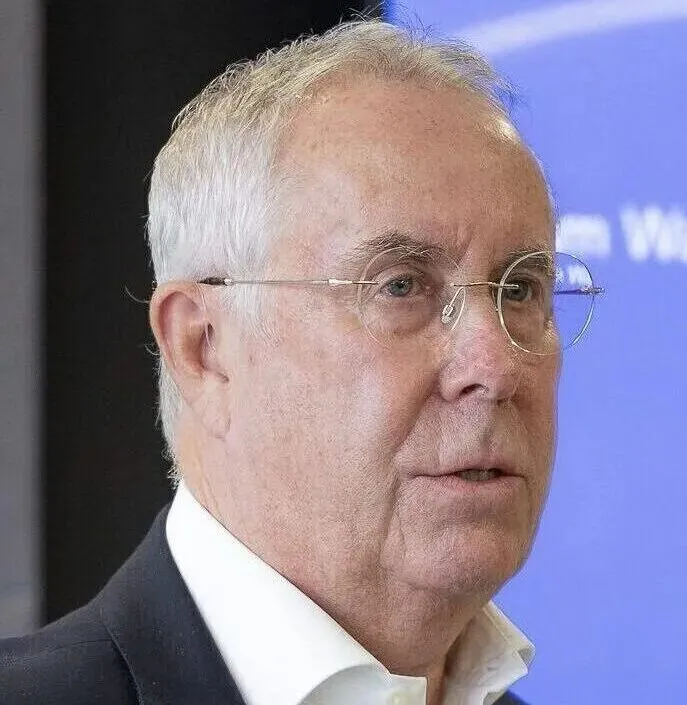
Tim Walder, chair of the British Aviation Group
For a time, the dramatic uptake of video calling and remote working during the pandemic was also seen as a potential long-term threat to aviation, with some predicting that demand for flights would be permanently diminished. That has not proven to be the case, with airports in the UK now back to and rising above pre-pandemic passenger numbers.
As a result, airports across the country have now announced the significant resumption of capital projects to expand capacity. These include long-standing plans for additional runways at Heathrow and Gatwick, and expansion in other facilities at airports like Luton. This took longer to happen in the UK than some other countries. British Aviation Group (BAG) chair Tim Walder is clear about why.
“The USA’s airports recovered from Covid faster and Europe recovered well, along with the Middle East. But in the UK [as well as in China and Portugal], where private ownership and management are the norm, the pandemic took away money while costs didn’t cease completely. That meant recovery in capital investment was therefore slower,” explains Walder.
“Public ownership allowed recovery to happen faster in other countries, with the state better able to absorb losses and risk. In the UK it took time for owner confidence to return as passenger numbers recovered gradually. The rush of projects now is due to that confidence returning and the return of passenger numbers enabling airports to borrow or finance to invest.”
The expansion plans now set to take place reflect what Walder calls a “perfect storm of full recovery and growth after a lack of big expansion for almost a decade”. But there is another aspect to this picture – the fact that many assets are now ageing.
“A lot of terminals were built in the 1980s or 1990s. Even terminals seen as new are not as new as people think – such as Terminal 5 at Heathrow, which will be 20 years old in 2027 and was designed in the 1990s,” he says.
This means a lot of assets are in need of modernisation if not replacement, because the profile of passengers has changed dramatically, as has technology. BAG – which is made up of companies spanning every part of airport delivery and operation – has made the passenger experience one of its major themes under its current strategy and recently hosted a roundtable in partnership with Department for Business and Trade to bring US and UK airports together on the subject.
“Passenger profiles have changed and passenger growth changes the demographic. Far more older people are flying than ever before, more young families with children are flying, too, and facilities need to reflect that. Heathrow has seen passengers needing assisted journeys, for example those with wheelchair needs, rise to over 2M last year and this subject came up in our recent mission to Dubai and Abu Dhabi, as well.
“At the same time, new generations travelling means new trends. Gen Z spends almost nothing at an airport besides buying food and drink, while baby boomer passengers spend more time and money at airports. Airports have to adapt to these trends, which impact what facilities, retail and food and drink offerings are optimal.”
This matters at UK airports for commercial reasons as well as good passenger experience. Aeronautical income comes from the fees paid by planes landing and parking at the airport, but that income can be matched or even exceeded by non-aeronautical income from shops, lounges, food and drink and car parking.
Public opinion
Some fixed-point infrastructure, like nuclear power plants, has seen a remarkable benefit from local public support when planning new projects that is often not seen with linear infrastructure like railways or power networks that pass through an area.
This reflects the degree of benefit to communities of the local employment created and the opportunities for local suppliers to win work. However, airports continue to face challenges from local pushback.
“There is still local opposition to airport expansion because of the perception of noise, pollution and increased traffic,” says Walder. “But there are mitigations. Aircraft are quieter and cleaner than they used to be, and public transport links are better and being improved.
“So, airports are making a big play to talk to communities and understand the impacts of noise and air quality on communities. But there is also local support for airports. Within each community is a local authority, and the local councillors may be told by some that they don’t want expansion, but they are also told by local businesses that the airport is great for their growth and their workers.”
Engagement with the public therefore takes different forms to reflect these different dynamics. Walder sits on the Heathrow Community Task Force, working with local colleges and universities. Birmingham Airport advocates for local skills for its workforce and Heathrow and Manchester are looking to do the same for local SMEs.
“Airports don’t want to be a remote neighbour, they want to engage directly, and this offers real advantages for communities and airports. Gatwick and Heathrow employ a lot of staff locally and can then provide sustainable transport for them. That represents thousands of staff going in and out of those airports every day and providing public transport access to work is highly efficient – reducing carbon, traffic and car parking spaces.”
Accessibility
Across the three BAG priorities – passenger, commercial and digital – data is now key to airports and to those that work in them. “Data drives innovation and that is not always easy with passenger data – the airport holds some data, public transport holds some data, airlines hold some data – and the data sets don’t talk to each other,” says Walder.
“If you think about that – we can leave our home and using our phone, we might take an Uber to the station, have our ticket for the train and boarding pass on our phone. We have the airport map on our phone and at the other end, another Uber journey on our phone. We can even check in at a hotel on our phone. That’s a lot of different parts not talking to each other even though they’re one journey on one phone.”
Behind the decisions made by airports is a growing wealth of data that supports design, delivery and operations. But one area where this is proving particularly valuable, says Walder, is accessibility.
“Adapting existing facilities for assisted journeys is complicated, especially with large numbers of passengers already using those facilities. It took high streets years to improve accessibility when new rules came in almost 30 years ago, and people who might find flying difficult have often been missing from passenger experience data because they simply didn’t fly.
“Flying as a wheelchair user years ago was not a great experience, and on any given flight there might have been just one or two passengers with mobility challenges. They weren’t well catered for and that led to varying degrees of chaos, with little idea of how many other passengers were being lost. But on a recent flight I took back to the UK, there were half a dozen people in need of special assistance on board, and airports are responding to this.
“With more elderly passengers flying, and with greater confidence among those with accessibility needs, airports are able to learn and change is happening. The same is true with more parents who have children in buggies choosing to fly, and they are alert to whether there is a toilet close at hand, or whether they can get in and around eateries or shops.
“We also heard at our Members Day recently about some of the changes this is leading to, such as new signage to support deaf people with sign language video displays, and variable screen colouring to support people with issues like dyslexia.”
Clearly, Walders sees issues such as accessibility not just as a challenge for airports, but as an opportunity.
“Airports must make the words ‘responsible development’ the heart and centre of airport development – reflective of the needs of an even wider demographic than today. Get that right and they’ll reap the rewards.”
Like what you’ve read? To receive New Civil Engineer’s daily and weekly newsletters click here.

