From model workers and master craftsmen to factory hands and gig-economy workers, China’s vast workforce is the bedrock of national development. Launched by the All-China Federation of Trade Unions, this series shines a spotlight on the responsibility and resilience of the modern Chinese working class, documenting their struggles and stories from the front lines to showcase the dedication, craftsmanship and pioneering spirit driving progress across every sector.
For nearly 30 years in civil aviation, Liu Yuhui has viewed research and development in aircraft diagnostics not as a job, but as a never-ending journey.
Liu, 53, an aircraft systems engineering management expert and senior engineer at China Southern Airlines Engineering Technology Branch, led the development of China’s first aircraft health management platform — the carrier’s Tiantong system.
In the late 1990s, as China Southern Airlines’ fleet expanded rapidly, critical engine data were still recorded by hand and entered manually after landing, meaning that in-flight problems could only be addressed once the aircraft was on the ground. Although newly acquired aircraft were equipped with manufacturer systems, the costs were prohibitive, while access to core codes and critical data was restricted.
In 1999, the carrier decided to develop an indigenous aircraft remote diagnostic system, with the daunting task entrusted to Liu, then a newcomer to the industry.
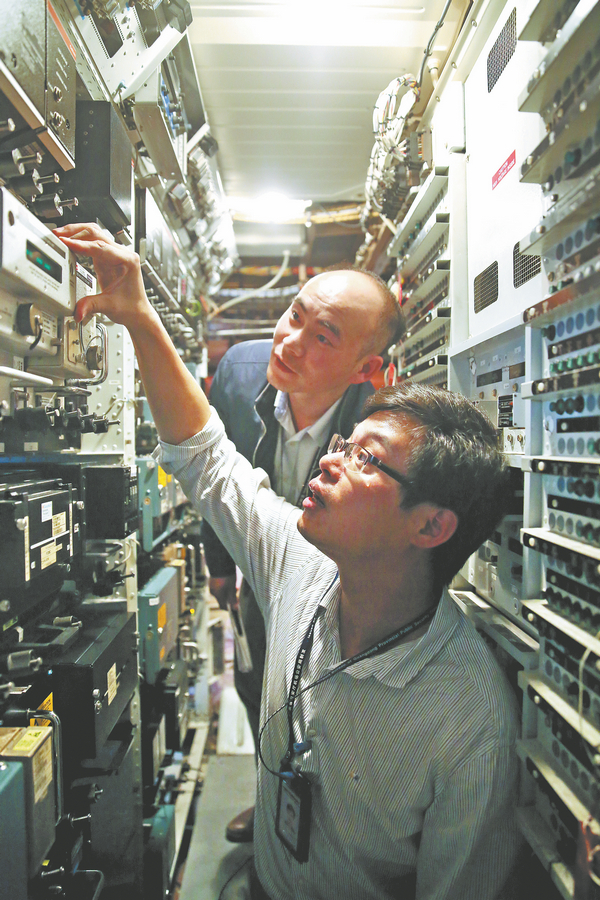
“We were neither the aircraft manufacturer nor the equipment maker … everyone knew how difficult this R&D would be,” Liu recalled. Faced with a triple challenge — no dedicated funding, no proven solution and no technical data — Liu refused to wait for help. To fill gaps in his knowledge, he returned to school for three years of postgraduate study and pored over English-language technical documents stacked higher than his 1.83-meter frame in search of the data he needed. He also practically lived at the maintenance site, examining faulty components, consulting veteran engineers and monitoring data streams to better understand the aircraft themselves.
In 2001, Liu’s team cracked the data-decoding challenge and completed a prototype of China Southern Airlines’ real-time aircraft remote diagnostic system, which enabled early fault detection, shortened inspection times and improved flight reliability. In 2006, the system received the airline’s first invention patent, pioneering the technology in China.
Deploying the prototype was merely the starting point, Liu said, adding that aviation technology has no limits; every newly introduced aircraft model and every upgrade in industry requirements brings a fresh round of technical challenges.
In 2007, with the company’s support, Liu established an airborne information unit and assembled a professional technical team to launch a comprehensive system upgrade. In 2022, this homegrown system — refined over two decades — was officially named Tiantong.
“The character tong refers to the pupil of the eye. This system essentially gives the aircraft an eye, linking ground engineers and flight crews through a shared information chain,” Liu said.
In recent years, as big data and artificial intelligence have advanced rapidly, Liu has embraced new technologies to expand the Tiantong system from single-fault monitoring into a digital “industrial internet plus smart monitoring” platform covering aircraft health management and full life-cycle control.
“Our early diagnostic models focused on individual stages of work; now they span the entire aircraft maintenance ecosystem,” Liu said. In 2024, the Tiantong system issued over 2,000 early warnings, helping China Southern Airlines achieve a fleet dispatch reliability rate of 99.9 percent — ranking among the world’s best for six consecutive years.
“In the future, we hope Tiantong will automatically display the health status of every aircraft each day, listing what needs to be done, what should be avoided, and the purpose of each required task,” Liu said.
Alongside developing new technologies, Liu also focuses heavily on nurturing newcomers. After the Liu Yuhui Model Worker Innovation Studio was launched in 2017, he established a structured mentorship program under which every new engineer is assigned a dedicated mentor and trained in everything from data decoding and system R&D to troubleshooting on actual aircraft.
“A true craftsman plays a long game — a decade to bloom and two decades to bear fruit,” said Liu, who is also a national master craftsman. He often draws on his own journey to impress this lesson upon young engineers.
Today’s master craftsmen are not just skilled workers, but versatile talents blending technology, practice and wisdom. Liu said he keeps his studio focused on balancing real-world engineering with forward-looking research, avoiding the pitfalls of valuing theory over practice or R&D over application.
“The R&D of aircraft remote diagnostics is an endless long march. New aircraft models keep arriving, and new technical barriers keep emerging. Only by constantly innovating and passing the torch can we meet these challenges with confidence.”


