
There’s a recently developed, more modern way of managing field operations that begins with seemingly simple form submissions and makes the most of data collection from sites
In UK infrastructure, collecting site data – known risks, incidents, asset utilisation, costs, photos and key performance indicators – should be more of a game changer than it is. But the daily pressures of work, disconnected systems or data siloes often cause this vital field data to be lost, left unstructured and forgotten.
Innovation: A new flow of data
This gap between potential and reality is a contributing factor to why Re-flow Field Management’s operations software recently won the Innovation Award at Highways UK. Their field management software is in use across worksites across the country’s entire construction sector.
The recognition validates their work in creating practical, usable workflows that establish a true end-to-end flow of data – from pre-site visits through to final invoicing.
The first element of this transformation lies in evolving the simple digital form into an intelligent, automated tool with an impact far beyond its original inception.
Where forms were once primarily used to record basic compliance (like RAMs sign-offs), they are now enriched with automations that connect company assets and processes, build a powerful long-term database and set up a flow of data throughout a job from the very first site visit.
Over time, this builds into a whole new way of working.
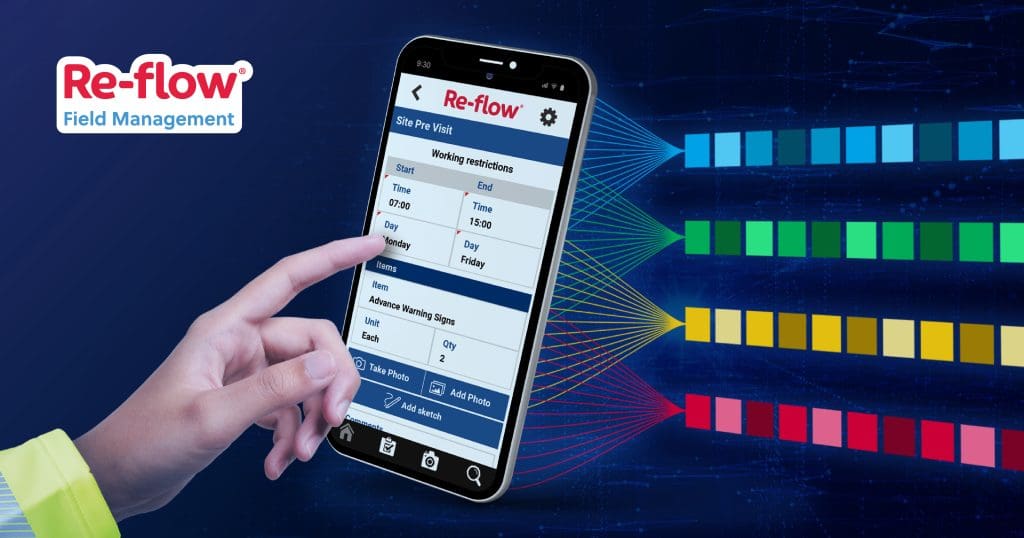
Step 1: The form that starts it all (the pre-site visit)
Re-flow has pioneered a form that begins the data flow even during estimating and pre-site checks.
Teams use a mobile app form to log all essential information: geo-tagged known hazards, permit-to-dig requirements and health and safety observations, complete with photos (and – soon – video). The apparent simplicity is deceptive: the submission of this single pre-site checklist instantaneously builds the entire job setup and automates office requirements, significantly reducing administrative time and eliminating disorganisation.
Step 2: Building a living, geo-tagged database
This pre-site data is stored and automatically resurfaces countless times over a job’s lifecycle – ready to be applied to daily job packs, for example.
Hazards are geo-tagged, creating a dynamic database of a location that builds over time – and ready to be used over and over again on future jobs in the same location. This intelligence can be downloaded to site workers’ mobile devices, meaning they have critical information even when they are working at sites with poor or no signal.
Step 3: Strategic impact and legacy
The result is a fundamental shift in how work is managed. Time-wasting administrative time-sinks are removed and oversight is dramatically improved.
Depot managers can pre-configure work packets with rich historical context and the more people work and capture data, the more the database grows. Over years, this same intelligence can be instantly drawn from previous jobs for future visits to the same area.
National Highways recently valued its own data at £60bn – and when your own historical and ongoing job information is never lost, the cumulative value leads to huge savings in efficiency.
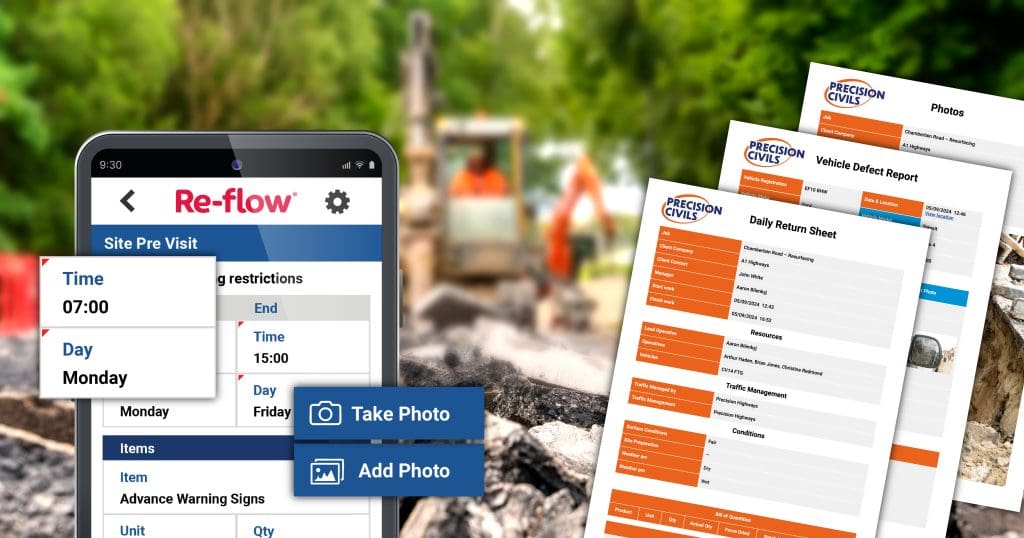
This organic accumulation of experience – where data is always at hand, recorded, reused and useful – is creating a new reality for field operations that deserves its own spotlight.
Chat to Re-flow’s team to see how its field operations software can transform your company’s site management.


