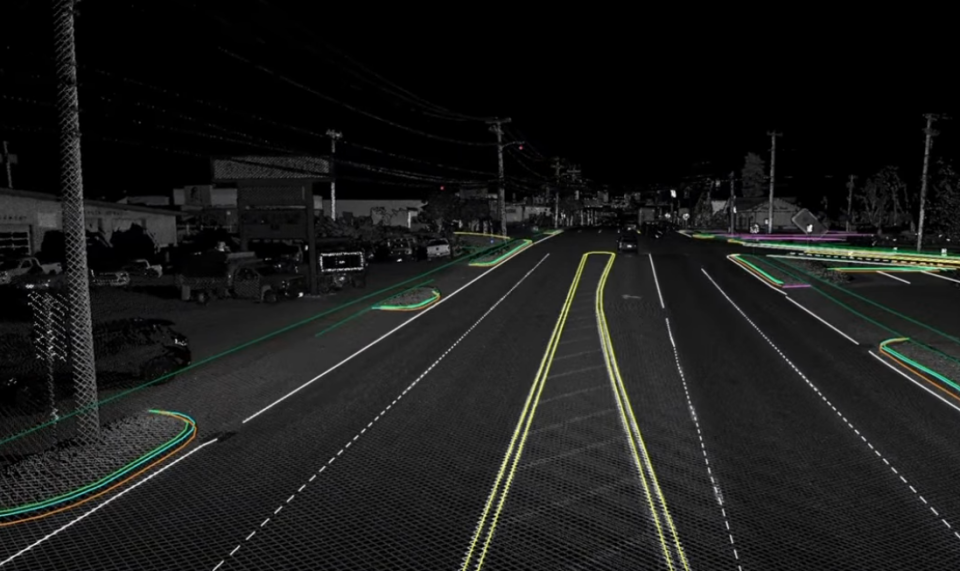
Mach9 is betting on a clear opportunity: America’s aging infrastructure needs rebuilding, and the industry needs faster ways to get there. To scale its AI-powered CAD software for surveying and civil engineering, the developer has raised US$34 million in a Series A round. Co-led by First Round Capital and Bessemer Venture Partners, with Prudence joining and Quiet Capital returning as an investor, the round brings the company’s total funding to US$49 million.
Much of America’s infrastructure was built in a single generation, designed to last 50 years. That was 70 years ago. Today, roads, utility poles and power lines across the country are reaching the end of their intended lives. In response, the Infrastructure Investment and Jobs Act allocated US$1.2 trillion to rebuild and repair these critical systems. But before engineers can build what’s next, they need an accurate blueprint of what’s already there.
Turning reality capture data into digital blueprints
Creating that initial blueprint is the job of survey teams, and it’s one of the first bottlenecks in nearly every infrastructure project. Advances in Lidar mean teams can scan miles of roadway in a day, but turning those scans into engineering drawings remains manual and can take weeks or months. And there are fewer licensed professionals to do the work. According to NCEES figures, resident surveying licences in the US fell by 24% between 2011 and 2025.
Mach9 is AI CAD software for civil engineering that turns reality capture data into digital blueprints up to 10 times faster at one-fifth of the cost. Civil engineering and surveying teams upload 3D scans of roads, utilities and construction sites collected with the equipment they already use. Mach9 then automatically drafts physical features like kerbs, signs, poles, lane markings and wires with centimetre-level accuracy. Surveyors and engineers review, refine and finalize the drawings using Mach9’s editing tools.
“We need to rebuild aging roads and utilities while expanding the power, transportation and communications networks people will rely on for decades to come,” said Alex Baikovitz, co-founder and CEO of Mach9. “We’re expanding the world’s capacity to build and maintain the infrastructure that people depend on.”
Mach9 was founded by Baikovitz, Haowen Shi, Michael Mong and Zach Sussman after meeting at Carnegie Mellon University’s Robotics Institute. They previously worked on systems that perceive and navigate the physical world at Tesla, SpaceX, Apple, NASA and Google X.
Public roads, power lines, fibre networks and railways
Engineering teams have now used Mach9 across more than 2,500 projects in all 50 states, surveying over 160,000km of infrastructure corridors – enough to cross the continental United States roughly 35 times. Its customers include civil engineering firms WSP, HNTB and NV5 and transportation agencies such as Caltrans, Minnesota DOT and the Maryland State Highway Administration.
On Interstate 8 in San Diego, Caltrans is using Mach9 to inventory rumble strips and other road-safety features, helping engineers identify gaps and plan improvements. In San Francisco, Kier + Wright is using Mach9 to increase pedestrian safety around schools. In Louisiana, Fibersmith is using Mach9 to help connect 125,000 homes and businesses that lacked high-speed internet.
“There are 4.2 million miles (6.76 million kilometres) of public roads in the US alone, before you count the power lines, fibre networks, railways and other infrastructure we rely on every day,” said Bill Trenchard, partner at First Round Capital. “Mach9 is building the software layer that will turn our physical world into information engineers can understand and act on. It will become a foundational tool for how our country’s infrastructure gets built and maintained.”
New generation of CAD software
“AI is creating the opportunity for a new generation of CAD software. Just as software transformed construction, AI CAD will transform how infrastructure is surveyed, designed, built and operated. Mach9 can become the platform that brings civil engineering into the AI era,” said Caty Rea, vice president at Bessemer Venture Partners. Rea led Bessemer’s investment in Mach9 with Brian Feinstein, who previously led the firm’s investment in Procore, one of the biggest successes in the architecture, engineering and construction (AEC) market over the past decade.
“Demand for infrastructure work keeps growing, but experienced engineering and surveying talent is finite,” said Rob Ashley, HDLS technology director at Pennoni. “Mach9 enables us to do 50% more work with the same experienced team. That means we can take on projects we otherwise wouldn’t have the capacity to deliver.”