Smart material-sensing platform for laser cutters can differentiate between 30 different materials
With the addition of computers, laser cutters have rapidly become a relatively simple and powerful tool, with software controlling shiny machinery that can chop metals, woods, papers, and plastics. While this curious amalgam of materials feels encompassing, users still face difficulties distinguishing between stockpiles of visually similar materials, where the wrong stuff can make gooey messes, give off horrendous odors, or worse, spew out harmful chemicals.
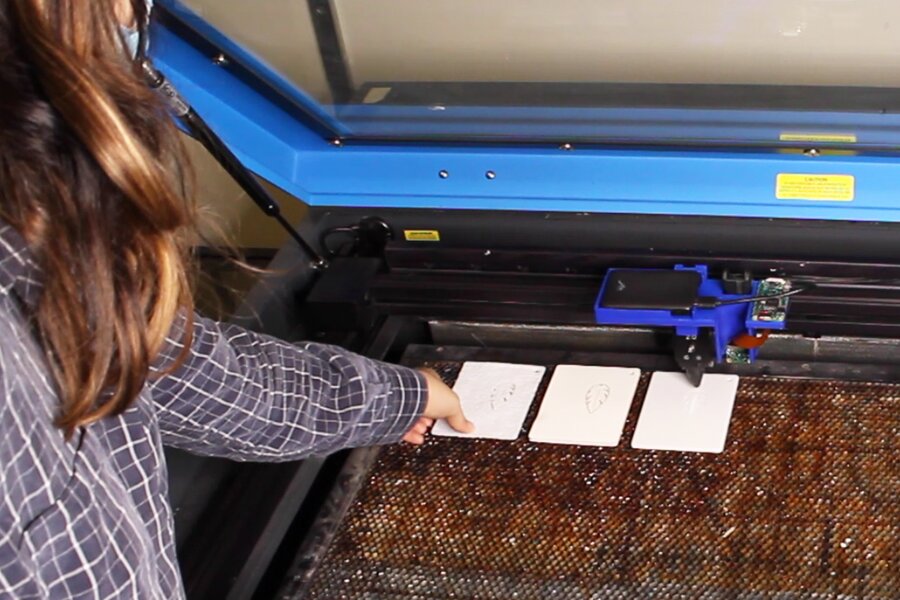
Addressing what might not be totally apparent to the naked eye, scientists from MIT’s Computer Science and Artificial Intelligence Laboratory (CSAIL) came up with “SensiCut,” a smart material-sensing platform for laser cutters. In contrast to conventional, camera-based approaches that can easily misidentify materials, SensiCut uses a more nuanced fusion. It identifies materials using deep learning and an optical method called “speckle sensing,” a technique that uses a laser to sense a surface’s microstructure, enabled by just one image-sensing add-on.
A little assistance from SensiCut could go a long way—it could potentially protect users from hazardous waste, provide material-specific knowledge, suggest subtle cutting adjustments for better results, and even engrave various items like garments or phone cases that consist of multiple materials.
“By augmenting standard laser cutters with lensless image sensors, we can easily identify visually similar materials commonly found in workshops and reduce overall waste,” says Mustafa Doga Dogan, Ph.D. candidate at MIT CSAIL. “We do this by leveraging a material’s micron-level surface structure, which is a unique characteristic even when visually similar to another type. Without that, you’d likely have to make an educated guess on the correct material name from a large database.”
Addressing what might not be totally apparent to the naked eye, scientists from MIT’s Computer Science and Artificial Intelligence Laboratory (CSAIL) came up with “SensiCut,” a smart material-sensing platform for laser cutters. In contrast to conventional, camera-based approaches that can easily misidentify materials, SensiCut uses a more nuanced fusion. It identifies materials using deep learning and an optical method called “speckle sensing,” a technique that uses a laser to sense a surface’s microstructure, enabled by just one image-sensing add-on.
A little assistance from SensiCut could go a long way—it could potentially protect users from hazardous waste, provide material-specific knowledge, suggest subtle cutting adjustments for better results, and even engrave various items like garments or phone cases that consist of multiple materials.
“By augmenting standard laser cutters with lensless image sensors, we can easily identify visually similar materials commonly found in workshops and reduce overall waste,” says Mustafa Doga Dogan, Ph.D. candidate at MIT CSAIL. “We do this by leveraging a material’s micron-level surface structure, which is a unique characteristic even when visually similar to another type. Without that, you’d likely have to make an educated guess on the correct material name from a large database.”
techxplore.com